
“Connective tissue {fascia} is very aptly named. Although its walls of fabric do act to direct fluids and create discrete areas, its uniting functions far outweigh its separating ones. It binds every cell in the body to its neighbors and even connects… the inner network of each cell to the mechanical state of the entire body.”
- Tom Myers, Anatomy Trains
This revolutionary footage shows live fascia in motion in a human forearm during surgery. Filmed by Dr. Jean Claude Guimberteau. The full documentary is available on youtube.
What is Fascia?
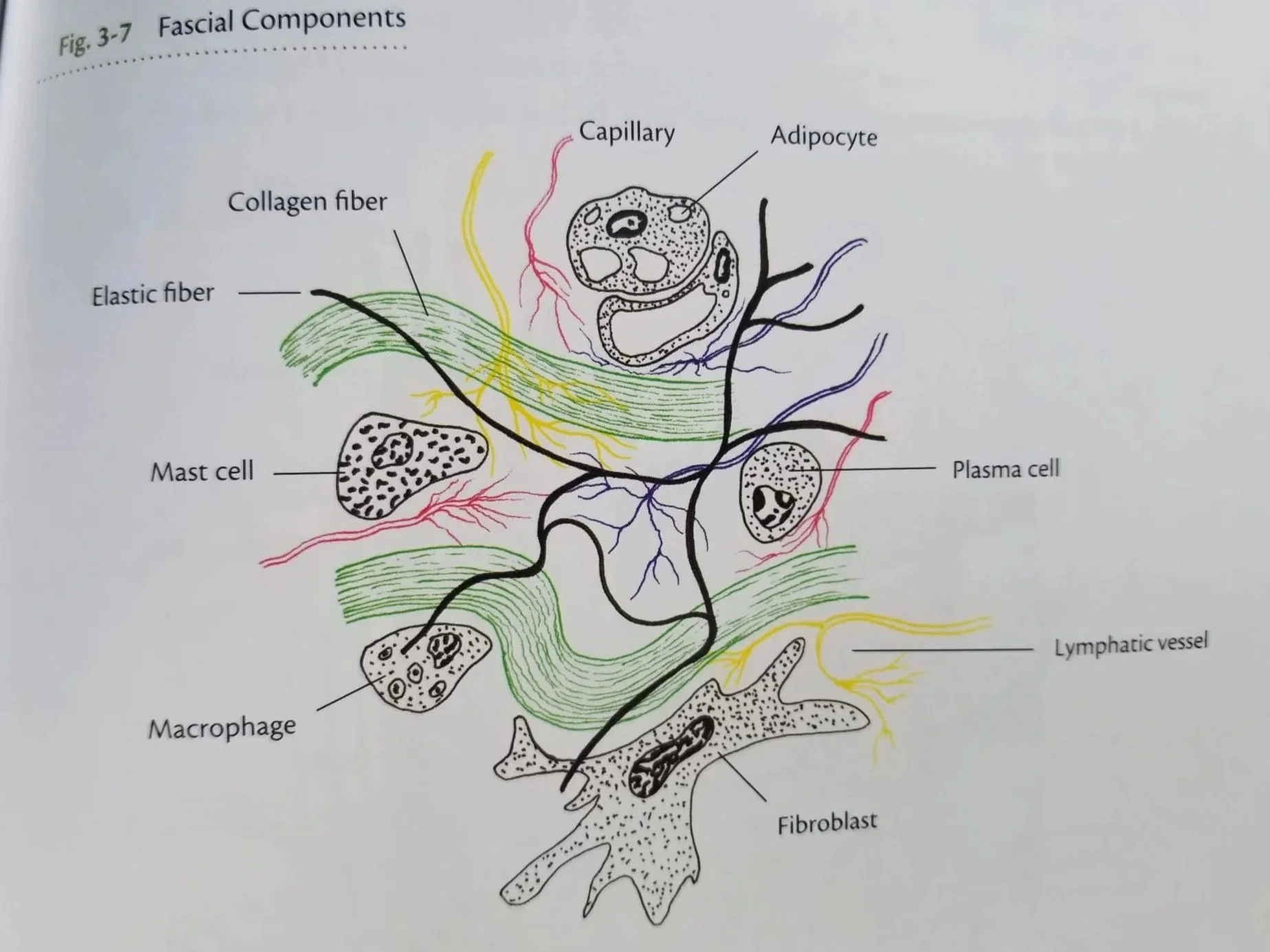
Throughout your cells, wrapping your bones, lining your blood vessels and nerves, encasing your muscles, and supporting your organs, your shape is created and supported by fascia. This versatile, dynamic substance is made of varying ratios of gooey liquid and strong and stretchy fibers. Fascia can adapt its texture from firm and supportive to loose and lubricating depending on the transmission of force through your tissues.
From “The Fasciae: Anatomy, Dysfunction and Treatment (2nd Edition)” by Serge Paoletti
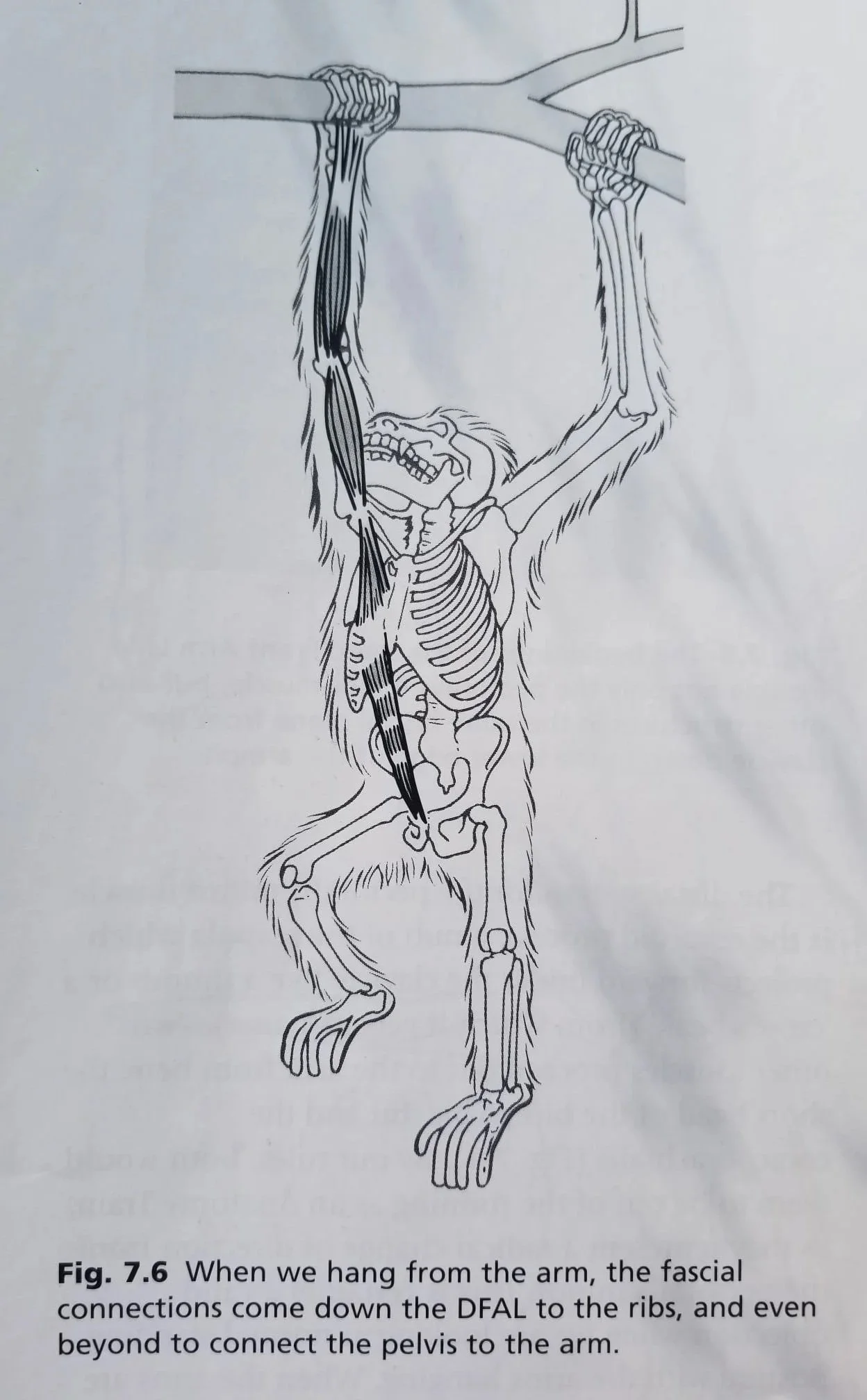
From “Anatomy Trains” by Tom Meyers
How does Fascia get Stuck?
When you move, or don’t move, when something traumatic happens to you, when you feel a new connection between parts of your body, your fascial net remembers. It remembers by adapting its texture, and thus function, to encourage that movement, or position, or experience of pain, or connection. Mostly, this helps you feel good and function by maintaining a dynamic balance of flow and structure to organize your body. Sometimes, however, your fascia gets stuck supporting something you don’t want to continue feeling. Fascia adhesions can manifest in frozen shoulder, nerve pain, headaches, chronic pain etc.
Your body likes to have space between layers of tissue so that fluids can exchange, nerves can slide and lymph can flow. When fascia gets tight and stuck, nerves sound the alarm, lymph and blood flow becomes compromised, and organ function and waste maintenance suffers. This can affect which muscles receive neural imput to contract and how your bones move in alignment with each other.
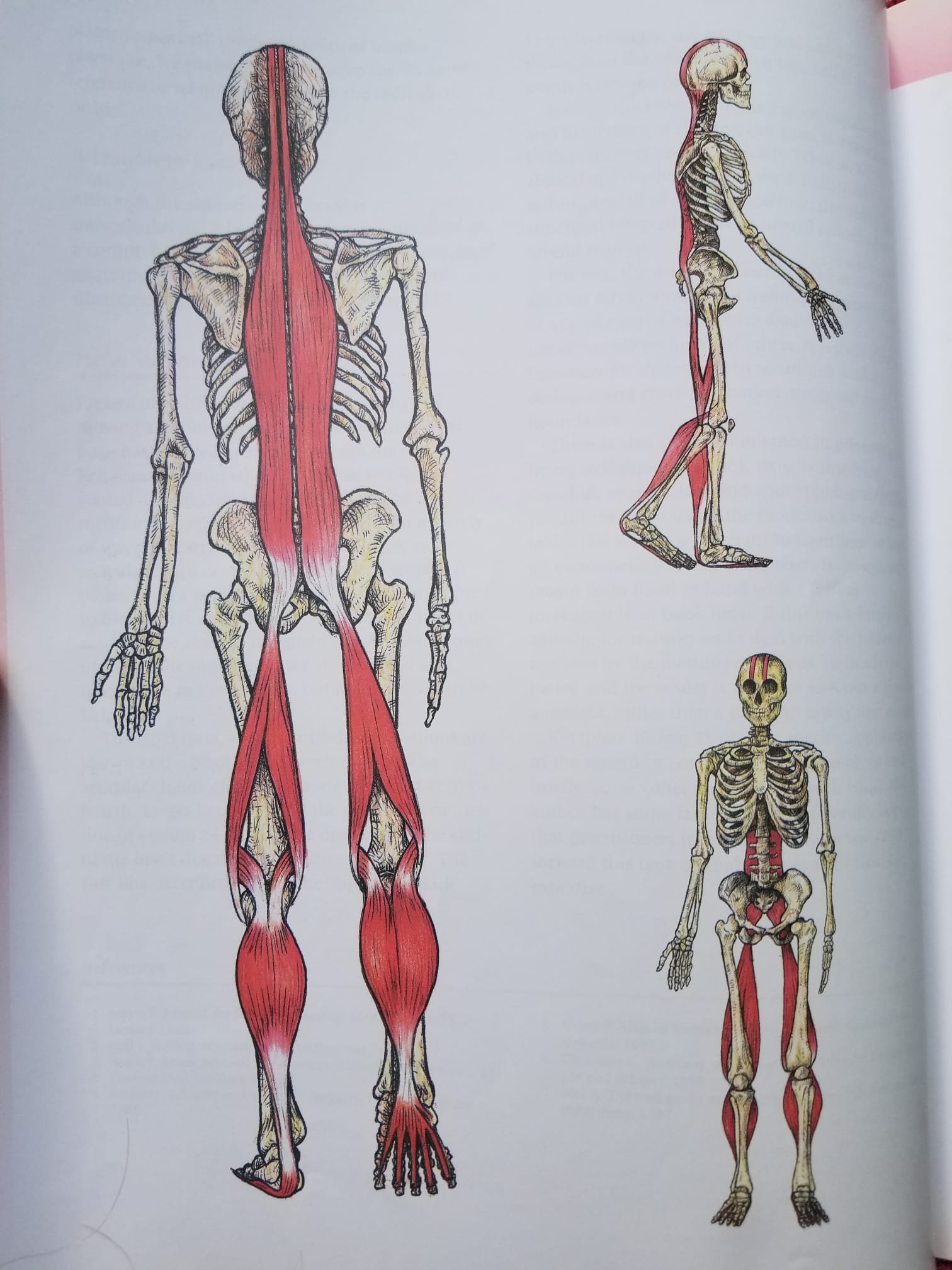
From “Anatomy Trains” by Tom Meyers
How does Fascia Bodywork Work?
Working with fascia to release these stuck places takes time, intention, respect for layers, and attention from you on what you feel. Any kind of massage can help bring more hydration, flow, and movement to the body. Fascia work in particular can affect broad structural, and thus functional, change. It can address a pattern from an injury decades ago or the spasm in your back this morning. More than fascia bodywork, however, fascial health needs conscious movement.
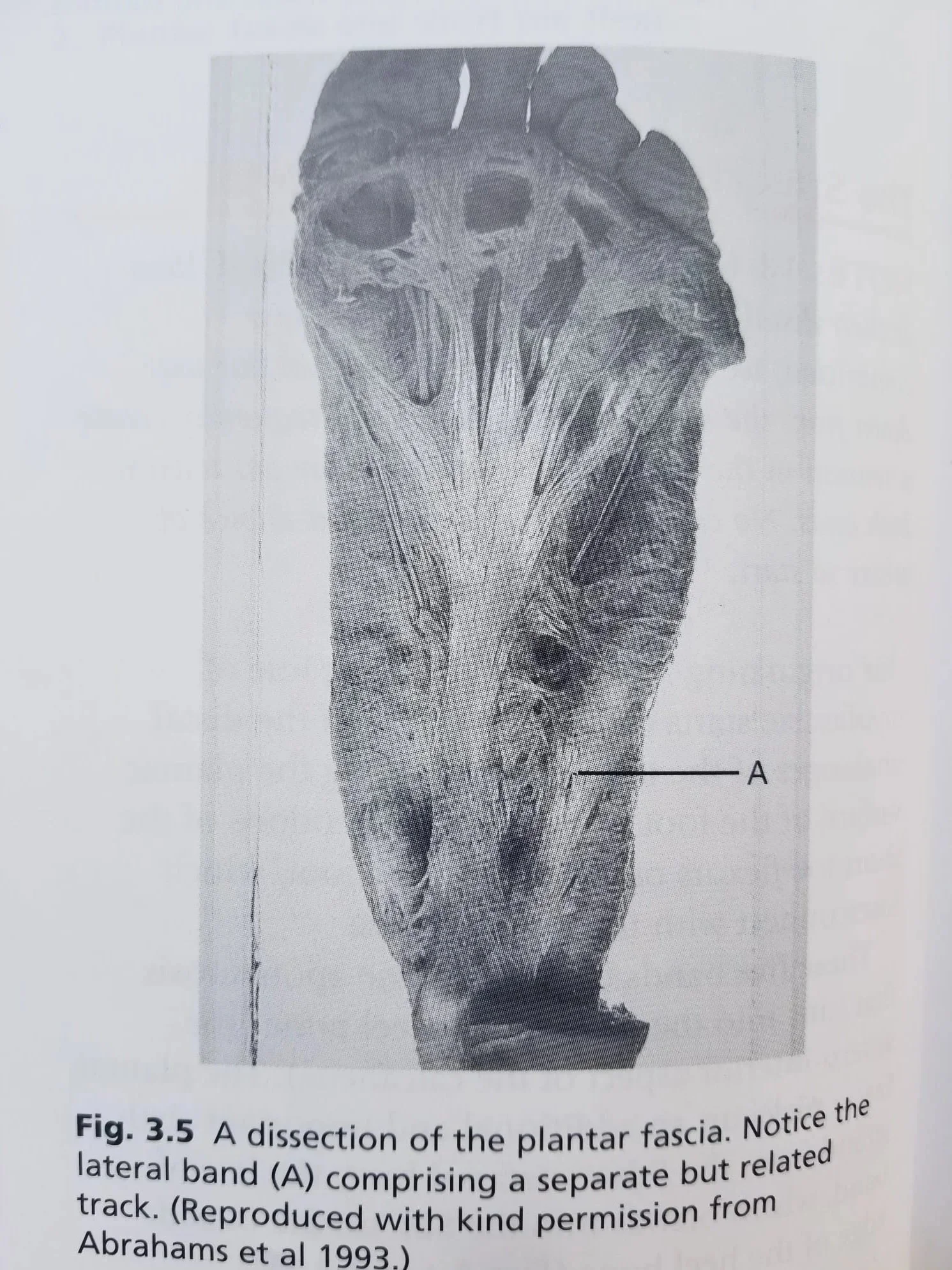
From “Anatomy Trains” by Tom Meyers
What is my Approach?
There is so much happening in fascia education, research, and many styles of fascial bodywork. I do not follow a single methodology. My approach to working with fascia is intuitive and curious, and informed by academic study, fantastic teachers, and embodied experience. I trust my body’s sensibility to connect with your body, while listening to the tension, pull, and release in your tissues. Ultimately, I trust your body’s innate knowledge of its own wholeness and path to wellbeing.

People in Fascia Research
Robert Schleip: Fascia, Emotion, Inflammation, and Attention
Til Luchau and Stephen Porges: Bodywork through the Polyvagal Lens
Carla Stecco: Demonstration of How Fascia provides Continuity of Movement
Gil Headly: Structure of Superficial Fascia